Medical Health Banner Templates V-84: Professional Healthcare Graphics
Creating a strong visual presence in the healthcare sector requires a specific kind of clarity and trust. You are working with sensitive topics where professionalism isn't just preferred; it is a requirement. When you need to establish that immediate sense of credibility for a clinic, a pharmaceutical launch, or a wellness blog, generic design assets often fall short. This is where specialized tools come into play. Medical Health Banner Templates V-84 offers a distinct approach to healthcare marketing materials, providing a full vector framework designed for high-impact communication.
Understanding the Visual Character of Template V-84
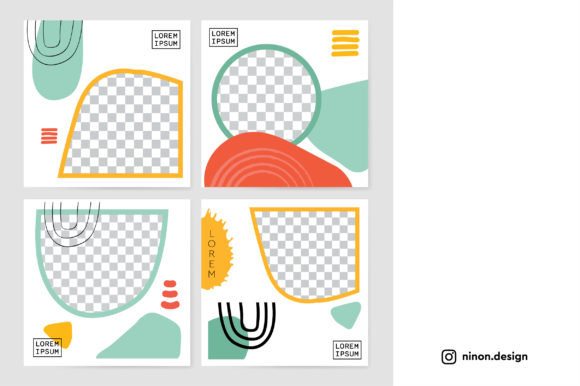
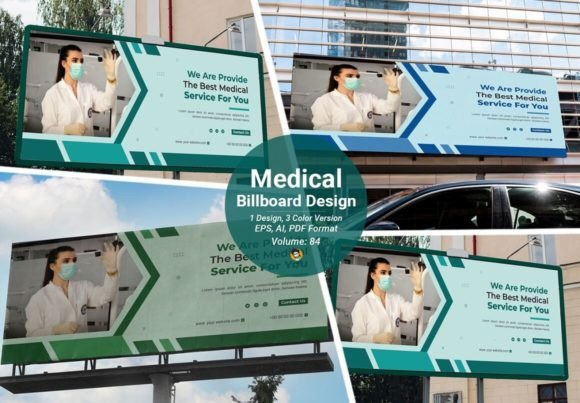
At its core, Medical Health Banner Templates V-84 is a collection of layout structures built to handle the heavy lifting of medical communication. The visual personality of this set leans toward the "modern medical" aesthetic. It balances the sterile, clean feel required for clinical environments with a human touch that puts patients at ease. The style is defined by open whitespace, structured grids, and distinct sections for imagery and text. This structure is not accidental; it guides the viewer's eye from the headline to the critical information without clutter.
The appeal lies in its adaptability. While the base design suggests a professional medical environment, the vector nature of the files (AI, EPS, PDF) means you can deconstruct and rebuild these elements to fit a softer, holistic wellness brand or a sharp, high-tech biotech startup. The "V-84" designation suggests a curated aesthetic that avoids the dated look of stock medical imagery. Instead, it focuses on layout efficiency. You have ample room for your own photography—since stock photos are not included—which is actually a significant advantage. It allows you to inject real authenticity into your designs rather than relying on generic "smiling doctor" images.
Practical Applications and Industry Versatility
The utility of these templates extends far beyond a simple hospital lobby poster. For graphic designers and marketing agencies, Medical Health Banner Templates V-84 serves as a rapid prototyping tool. When a client requests a campaign for a new flu season vaccine or a dental hygiene drive, starting from scratch is inefficient. These templates provide a professional skeleton that can be customized in Adobe CS4 and above, ensuring you meet tight deadlines without sacrificing quality.
Small business owners in the health space—such as private practice therapists, chiropractors, or boutique gym owners—will find these assets particularly valuable. You might not have the budget for a full rebrand every quarter, but you do need consistent marketing materials for social media and local print ads. Because the file size is optimized for print at 70x30 inches and 300 DPI, you can scale these designs for everything from a small Facebook banner to a massive roadside billboard without pixelation. This scalability is the hallmark of a true premium font and design asset collection.
Specific Use Cases for Different Creators
- Content Creators and Bloggers: If you run a health-focused blog or a YouTube channel, consistent branding is key. You can use these templates to create cohesive thumbnails and sidebar graphics that signal professionalism to your audience.
- Event Organizers: For medical conferences, charity runs, or wellness retreats, the need for signage is constant. These vector files allow you to create directional signage, stage backdrops, and handout materials that all share the same visual language.
- Publishers: Editorial design for health magazines or brochures often requires a balance of text and imagery. The layout logic within V-84 helps manage text hierarchy, making dense medical information digestible.
Integrating Typography and Brand Identity
A design template is only as good as the typography that fills it. Medical Health Banner Templates V-84 addresses this by including a free download link for the recommended fonts in the help file. This is a crucial detail. Typography in healthcare design needs to prioritize readability above all else. A highly decorative script font might look beautiful, but if a patient cannot read your clinic hours or dosage instructions, the design fails.
The fonts included with this package are likely chosen for their legibility at various sizes. When you open the file in Adobe Illustrator (CS4 or later), pay attention to the font pairing suggested by the creators. Often, a bold sans-serif font is used for headlines to grab attention, while a clean serif or sans-serif font is used for body text to aid long-form reading. This interplay creates a visual hierarchy that tells the viewer what is most important first.
However, you are not locked into these choices. Because the files are fully editable, you can swap these typefaces for your own brand fonts. If your brand identity relies on a specific modern typography style—perhaps a geometric sans-serif for a tech-med vibe—you can easily apply that globally across the banner. The key is to maintain the spacing and kerning established in the original template, as that spacing was likely calculated to prevent the design from feeling crowded.
Evaluating the Technical Specs
Before purchasing or downloading any design asset, a professional must evaluate the technical specifications. The fact that these templates are provided in AI, EPS, and PDF formats ensures compatibility across almost all professional workflows. The EPS format is particularly useful if you are using older software or need to pass the file to a print vendor who uses a non-Adobe RIP (Raster Image Processor).
The 300 DPI resolution at 70x30 inches is the industry standard for high-quality print. This means the vector elements will remain crisp, and any raster effects (like shadows or gradients) applied within the template will hold up under scrutiny. For designers, this removes the anxiety of delivering a file only to have the printer report that the resolution is too low. It is a production-ready asset.
Maximizing Impact with Design Assets
Using Medical Health Banner Templates V-84 effectively requires more than just swapping out the logo. It requires an understanding of color theory in a medical context. The template likely comes with a suggested color palette—often blues, greens, and whites, which subconsciously signal health, calm, and cleanliness. However, if you are branding a pediatric clinic, you might want to inject warmer, more playful colors. The vector paths allow you to recolor every single element, from background shapes to accent lines.
Consider the user experience when designing for digital platforms. If you are adapting this banner for a website header, you may need to adjust the composition for a wider, shorter aspect ratio. The "Easy Customization" claim of the V-84 set usually implies that elements are grouped logically and named clearly in the layers panel. This organization is what separates amateur assets from professional ones. It allows you to isolate a specific graphic element—like a medical cross or a heartbeat line—and use it elsewhere in your branding, such as on a business card or a letterhead.
Final Thoughts on Selection
When deciding if this specific volume is right for your project, look at the "personality" of the layouts. Do they feel too corporate for your organic health brand? Or are they perfectly sterile for your surgical center? Since photos are not included, you must have a library of your own high-quality images ready, or plan to purchase stock photography separately. This is a benefit, not a drawback, as it ensures your final product looks unique. Ultimately, Medical Health Banner Templates V-84 provides a robust, professional framework that saves time and elevates the perceived value of any health-related project.